Honky-tonk

Hank Williams. maverick-country.com

Blast from the Past: Hank Williams

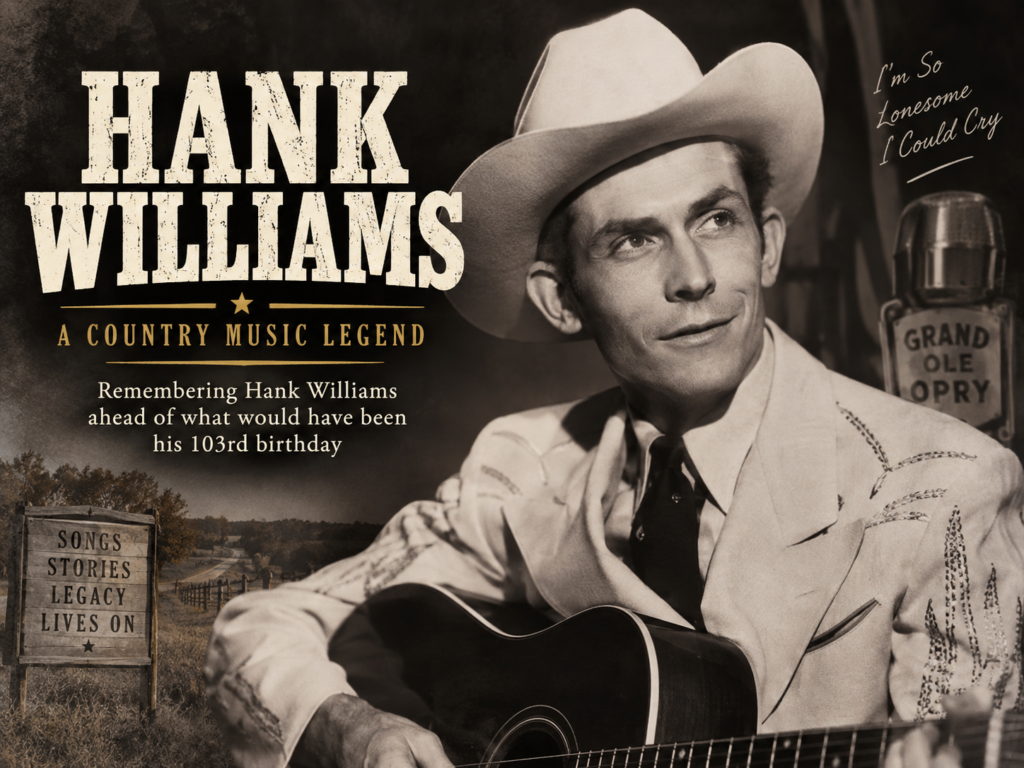
On 17 September, country music fans will mark what would have been the 103rd birthday of Hank Williams, an artist whose remarkably short life produced one of the most influential catalogues in the genre’s history. More than seven decades after his death, Williams’s songs of heartbreak, loneliness, love and faith remain fundamental to country music. Hank Williams grows up in Alabama Hiram King Williams was born on 17 September 1923 in Mount Olive, Alabama, and experienced considerable hardship during his childhood. Williams was born with spina bifida occulta, which contributed to lifelong back pain and would later play a role in his dependence on alcohol and medication. Music offered another direction. As a young man, Williams learned from African American blues musician Rufus Payne, known as Tee Tot, whose influence helped shape his distinctive approach to rhythm and performance. By his teenage years, Williams was performing publicly and eventually formed his backing group, the Drifting Cowboys. Nashville success transforms his career Williams signed with MGM Records in 1947 and soon began establishing himself nationally. “Move It on Over” became an early success, but “Lovesick Blues” transformed his career after its release in 1949. The recording became a major hit and helped earn Williams a place at the Grand Ole Opry. More classics followed, including “Why Don’t You Love Me”, “Long Gone Lonesome Blues”, “Cold, Cold Heart”, “Hey, Good Lookin’” and “Jambalaya (On the Bayou)”. Williams possessed an extraordinary ability to make simple language emotionally powerful. His songs frequently addressed relationships, rejection and loneliness without losing the directness that made them accessible to a broad audience. Heartbreak shapes Hank Williams songs Williams’s personal life was often as turbulent as the stories contained within his music. His marriage to Audrey Sheppard was particularly significant, with their difficult relationship influencing both his personal and professional life. The couple had a son, Hank Williams Jr., who would later establish his own major country music career. Behind Williams’s growing fame were increasingly serious problems with alcohol, prescription drugs and chronic pain. His unreliability eventually damaged professional relationships, and he was dismissed from the Grand Ole Opry in 1952. Hank Williams dies aged 29 Williams’s life ended with shocking suddenness. While travelling to a scheduled performance in Canton, Ohio, Williams died in the back seat of a Cadillac during the early hours of 1 January 1953. He was just 29 years old. Despite his brief career, the songs continued. “Your Cheatin’ Heart”, recorded before his death, became one of his defining posthumous releases and remains among the most recognisable heartbreak songs in country music history. Hank Williams leaves lasting legacy Williams was inducted into the Country Music Hall of Fame in 1961 and has subsequently received recognition extending far beyond country music. His songwriting influenced generations of country, rock, folk and Americana performers, while recordings such as “I’m So Lonesome I Could Cry” continue to demonstrate the emotional simplicity that made his work so distinctive. Artists have changed, production has evolved and country music has expanded dramatically since Williams first stepped onto the Grand Ole Opry stage. Yet the themes at the heart of his songs remain remarkably familiar. As what would have been his 103rd birthday approaches, Hank Williams remains more than a historical figure. His music helped establish the language of modern country songwriting, and more than 70 years after his death, artists are still speaking it.

Blast from the Past: Hank Williams Read More »
George Jones. maverick-country.com

Blast from the Past: George Jones

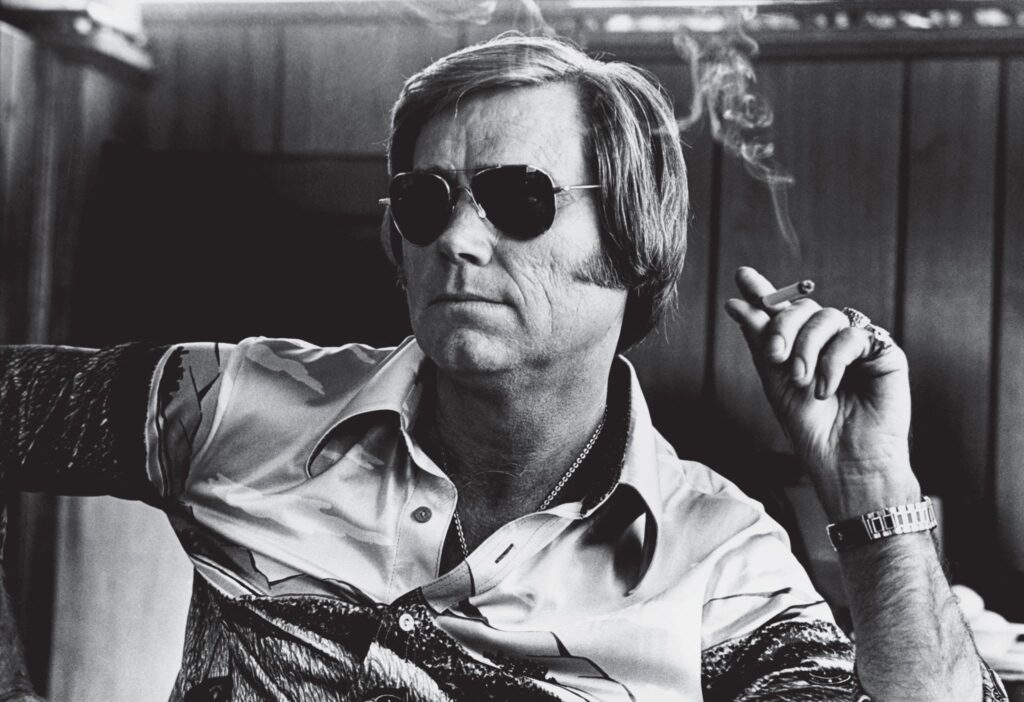
With what would have been George Jones’s 95th birthday approaching on 12 September, it is a fitting time to remember one of the most distinctive and influential voices in country music history. Known affectionately as “The Possum”, Jones experienced extraordinary success alongside turbulent personal struggles, leaving behind a catalogue that continues to influence country artists today. From Texas to country music George Glenn Jones was born on 12 September 1931 in Saratoga, Texas, and grew up in a large, working class family. Music became an important part of his childhood, with Jones singing in church and learning guitar. After serving in the United States Marine Corps, he began pursuing music professionally and emerged from the Texas country scene during the 1950s. His first major breakthrough arrived with “Why Baby Why” in 1955. It established Jones as a rising country performer and began a recording career that would span more than half a century. George Jones finds his voice Jones initially drew inspiration from artists including Hank Williams, but gradually developed one of country music’s most recognisable vocal styles. His ability to communicate heartbreak, regret and vulnerability became central to his appeal. Songs including “The Window Up Above”, “She Thinks I Still Care”, “The Grand Tour” and “A Good Year for the Roses” helped establish him as one of the genre’s greatest interpreters of emotional songs. His most celebrated recording arrived in 1980 with “He Stopped Loving Her Today”. The devastating story of a man whose love ends only with his death became synonymous with Jones and is widely regarded as a country music classic. George Jones and Tammy Wynette Jones’s personal and professional relationship with Tammy Wynette became another defining chapter of his career. The pair married in 1969 and became one of country music’s most famous couples. Together they recorded songs including “We’re Gonna Hold On”, “Golden Ring” and “Near You”. Their marriage ended in divorce in 1975, but their musical partnership continued, with their voices remaining closely associated with the classic country duet tradition. Personal struggles and No Show Jones Behind his musical success, Jones endured serious problems with alcohol and drugs. His unpredictability led to missed concerts and earned him the nickname “No Show Jones”. Those struggles became inseparable from his public image for a period, but his life eventually became more stable. His marriage to Nancy Sepulvado in 1983 proved particularly important, and Jones later credited her with helping him rebuild his life and career. He continued recording and performing for decades, becoming an elder statesman for traditional country music as the genre changed around him. A lasting country music legacy Jones received numerous honours during his lifetime, including induction into the Country Music Hall of Fame in 1992 and recognition at the Kennedy Center Honors in 2008. He also received a Grammy Lifetime Achievement Award in 2012. George Jones died on 26 April 2013 in Nashville, aged 81. From his unmistakable phrasing to the raw emotion he brought to heartbreak songs, Jones helped establish a benchmark for country singing that generations of performers have attempted to follow.

Blast from the Past: George Jones Read More »

Tristan Roberson. maverick-country.com

Tristan Roberson

At just 18 years old, Tristan Roberson has already established himself as one of modern country music’s brightest young talents. The Texas-born singer-songwriter, multi-instrumentalist and award-winning performer is due to release his sophomore album, “Down For The Ride” on July 31. “Down For The Ride” a 14-track collection that highlights both his musical growth and his commitment to authentic country storytelling. The album blends traditional country influences with contemporary production, exploring themes of young love, ambition, heartbreak, humour and self-discovery. Title track captures youthful optimism Produced by acclaimed producer Tre Nagella, “Down For The Ride” features 14 songs that were all written or co-written by Roberson, demonstrating a level of songwriting maturity that belies his age. The title track combines lively fiddle, driving acoustic and electric guitars, energetic drums and memorable hooks to tell the story of falling for someone despite knowing it may not be the wisest decision. Roberson said: “Down For The Ride” is the title track to my sophomore album. I wrote or co-wrote every song on the record, and this one is about falling in love with a girl even though it might be a bad idea.” Traditional influences meet modern country That blend of classic storytelling and modern production has become one of Roberson’s defining characteristics. Drawing inspiration from George Strait, Alan Jackson, George Jones, Hank Williams Jr., Parker McCollum, Zach Top and Cody Johnson, he has developed a sound equally suited to Texas dancehalls, country radio and streaming playlists. Streaming success continues to grow The album follows an extraordinary two-year rise that has seen Roberson amass more than 20 million Spotify streams, over 500,000 followers across Instagram and Facebook, and more than 100,000 YouTube subscribers. His music has also been featured on major Spotify Editorial playlists including New Music Friday, All New Country, Fresh Finds Country, Next From Nashville and Texas Country Now, helping introduce his music to listeners around the world. Chart success and industry recognition Roberson has also enjoyed significant success on country radio, earning four No. 1 singles on the Texas Regional Radio Report, while also achieving national chart success on MusicRow CountryBreakout and Mediabase Country Indie. His music continues to receive regular airplay across Texas and throughout the United States. His achievements have been recognised with numerous awards, including Texas Country Music Awards Emerging Artist of the Year, Texas Regional Radio Awards New Male Vocalist of the Year, Josie Music Awards Young Artist of the Year, Global Music Awards Country Emerging Artist, and induction into the Texas State Songwriters Championship Hall of Fame. Most recently, he was named a finalist at the 2026 Texas Country Music Awards in the categories of Male Artist of the Year, Country Album of the Year and Country Single of the Year. Building a reputation on stage Away from the studio, Roberson has become one of country’s most exciting young live performers. He has headlined iconic Texas dancehalls, appeared at major festivals, performed the National Anthem at professional sporting events, and shared stages with Aaron Watson, Braxton Keith and William Beckmann. His energetic performances and veteran stage presence have helped establish him as one of independent country’s fastest-rising artists.

Tristan Roberson Read More »

Born and Raised Festival. maverick-country.com

Born & Raised Music Festival

Born & Raised is a three-day country music festival held each September in Pryor, Oklahoma, bringing together country music fans for a weekend of live entertainment and camping. The 2026 festival takes place from 17 to 19 September, with attendees encouraged to arrive early and enjoy the full festival experience, including on-site camping and a Wednesday night pre-party. Designed as an all-ages event, Born & Raised combines major headline performances with a welcoming atmosphere that celebrates country music and community. Fans can choose from a range of ticket options, including General Admission, VIP and glamping packages, while enjoying food vendors, merchandise, camping facilities and a variety of festival amenities. Set against the backdrop of Oklahoma, just a short drive from Tulsa, Born & Raised has established itself as one of the region’s premier country music festivals, offering an immersive weekend where fans can dust off their boots, enjoy live music and create lasting memories.

Born & Raised Music Festival Read More »

Alan Jackson. maverick-country.com

Blast from the Past: Alan Jackson

Alan Jackson has hung up his guitar after almost four decades in country music. He brought his show, Last Call: One More for the Road, to an end on Saturday, June 27 in front of 80,000 devoted fans. Nashville and stars turn out for Alan Jackson Thousands more watched as the event was streamed at the Country Music Hall of Fame’s CMA Theater, Belmont University and on stages across Broadway, a testament to how much Jackson means to Nashville and to country music. Taking to the stage at the Nissan Stadium in Nashville for a near two-hour set, he was joined by other country megastars including George Strait, Luke Combs, Carrie Underwood and Lainey Wilson. The show will be broadcast on NBC later in the year and an album of the show is available for pre-order. The hitmaker, who is one of the best-selling music artists of all time with 35 number one songs on the Billboard Hot Country Songs chart, called time on his career after being diagnosed with from Charcot-Marie-Tooth disease, a neurological disorder. As country music bids farewell to one of its greatest storytellers, Maverick looks back at Alan Jackson’s remarkable career and explores why he remains one of the genre’s most beloved artists. Alan Jackson’s career transformed modern country music Few artists have shaped country music quite like Alan Jackson. Emerging in the late 1980s as part of the genre’s new traditionalist movement, the Georgia native quickly earned a reputation for blending classic honky-tonk influences with contemporary storytelling. His debut album, “Here in the Real World”, introduced audiences to an artist whose authenticity and songwriting would define an era of country music. Over the following decades, Jackson became one of the genre’s most consistent hitmakers, earning 35 number one singles on the Billboard Hot Country Songs chart and selling more than 75 million records worldwide. Songs such as “Chattahoochee”, “Remember When”, “Drive (For Daddy Gene)”, “Livin’ on Love” and “It’s Five O’Clock Somewhere” have become country music staples, resonating with generations of fans through their heartfelt lyrics and timeless melodies. Alan Jackson’s biggest awards and achievements Jackson’s remarkable career has been recognised with countless honours. He is a member of the Country Music Hall of Fame and the Nashville Songwriters Hall of Fame, while also receiving the prestigious Willie Nelson Lifetime Achievement Award from the Country Music Association. Throughout his career, he collected multiple CMA Awards, ACM Awards and Grammy Awards, cementing his place among country music’s all-time greats. His influence extends beyond chart success, with many of today’s leading artists citing Jackson as an inspiration for preserving the traditional sounds and values of country music. Alan Jackson’s legacy will continue to inspire country music In recent years, Jackson continued to perform despite publicly revealing his diagnosis of Charcot-Marie-Tooth disease, a hereditary neurological condition that affects balance and mobility, in 2021. His decision to embark on the Last Call: One More for the Road tour allowed fans one final opportunity to celebrate an extraordinary catalogue of songs that has soundtracked countless lives. Although he has now stepped away from touring, Alan Jackson’s impact on country music remains immeasurable. His songs continue to receive regular radio airplay, while younger artists frequently cover his work and acknowledge his influence on their own careers. For millions of fans, Alan Jackson represents the very best of traditional country music: honest storytelling, memorable melodies and an unwavering commitment to authenticity. As one chapter closes, his legacy is assured, ensuring his music will continue to inspire audiences for generations to come.

Blast from the Past: Alan Jackson Read More »

George Strait. Maverick-country.com

Blast from the Past: George Strait

Earlier this week, George Strait celebrated his 74th birthday. Here, Maverick Country delves into the life and times of this record-breaking country legend.  A Texas Voice That Changed Country Music For more than four decades, George Strait has remained one of the defining voices of American country music. While trends have shifted dramatically around him, from the polished “Urban Cowboy” movement of the early 1980s to today’s stadium driven country pop crossover era, Strait has consistently represented the traditional heart of the genre. In doing so, he has not only preserved country music’s foundations, but reshaped its commercial future. Known universally as the “King of Country”, Strait’s influence extends far beyond his extraordinary catalogue of hit records. His career changed the trajectory of Nashville itself, proving that authenticity and commercial success were not mutually exclusive. Few artists in any genre have balanced cultural relevance, longevity and artistic consistency with such precision. George Strait’s Early Life and Influences Born in Poteet, Texas, in 1952 and raised in nearby Pearsall, Strait grew up immersed in ranch life and western culture. His musical influences came from classic country traditionalists including Hank Williams, Merle Haggard, Lefty Frizzell and George Jones. Unlike many performers who arrived in Nashville seeking reinvention, Strait arrived fully formed. He did not attempt to modernise himself for the market. Instead, the market eventually adjusted to him. That distinction became critically important during the early 1980s. At the time, country music was heavily influenced by pop crossover production following the commercial success of artists linked to the Urban Cowboy movement. Traditional instrumentation and western swing influences were becoming increasingly rare in mainstream radio. Strait’s arrival offered an alternative. The Rise of Neo Traditional Country His breakthrough single, Unwound, released in 1981, immediately stood apart. Featuring fiddle, steel guitar and a distinctly Texas influenced arrangement, it rejected the polished pop sheen dominating country charts. The success of the track, followed by his debut album Strait Country, helped trigger what many historians now describe as the neo traditionalist movement in country music. Alongside artists such as Randy Travis and Ricky Skaggs, Strait helped restore traditional songwriting and instrumentation to mainstream prominence. Yet even among that influential generation, Strait occupied a unique position. While others often leaned heavily into nostalgia, Strait’s music felt contemporary without abandoning country’s core identity. That balance became the foundation of his extraordinary longevity. George Strait’s Biggest Hits Across the 1980s and 1990s, Strait delivered an unprecedented run of commercial success. Songs including Amarillo by Morning, The Chair, All My Ex’s Live in Texas, Check Yes or No, and I Cross My Heart became defining records not simply because they were popular, but because they reflected emotional clarity and restraint. Strait rarely relied on vocal theatrics. His delivery remained calm, measured and conversational. In an era increasingly dominated by spectacle, that understated style became his greatest strength. His influence on country music’s vocal approach remains significant today. Countless artists, particularly male country singers, adopted aspects of Strait’s phrasing and emotional control. The modern country emphasis on smooth baritone storytelling owes much to the blueprint he established. Commercial Success and Industry Impact Commercially, the statistics surrounding Strait’s career remain staggering. He has achieved more than 60 number one singles across various charts, sold tens of millions of records worldwide and earned one of the highest grossing touring careers in country music history. Yet unlike many legacy acts, Strait never depended on reinvention cycles or headline controversy to sustain relevance. Part of his enduring appeal lies in consistency. Fans understood exactly what a George Strait record represented: strong songwriting, traditional musicianship and emotional honesty. That reliability created extraordinary audience loyalty across multiple generations. George Strait’s Influence on Modern Artists Perhaps more importantly, Strait helped establish commercial space for traditional country artists in modern Nashville. Without his success, it is difficult to imagine the mainstream rise of later artists such as Alan Jackson, Clint Black, or even contemporary traditionalists like Jon Pardi and Cody Johnson. Strait demonstrated that country audiences still valued western identity, fiddle driven arrangements and songs grounded in everyday realism. His influence also extends to live performance culture within country music. Strait avoided elaborate choreography and theatrical excess, focusing instead on musicianship and catalogue strength. That approach reinforced the idea that country concerts could succeed through connection rather than production scale alone. Even in stadium environments, Strait’s performances retained an almost intimate quality. Protecting Traditional Country Music Importantly, Strait’s career coincided with country music’s rapid commercial expansion during the 1990s. As Nashville increasingly pursued crossover audiences, Strait became a stabilising figure for listeners concerned about the genre losing its roots. He effectively bridged traditionalism and commercial accessibility without appearing politically positioned within industry debates. That subtlety allowed him to remain respected across virtually every segment of the country audience. Today, George Strait’s influence is visible not only in sound, but in philosophy. Many modern artists speak openly about maintaining authenticity, protecting songwriting integrity and resisting trend driven production. Those values became commercially viable largely because Strait proved they could succeed at the highest level. The Lasting Legacy of George Strait Few artists manage to define a genre while simultaneously preserving it. George Strait achieved both. His legacy is not simply built on hit records or awards, although he has accumulated more than most artists could imagine. His lasting contribution lies in safeguarding the emotional and musical language of country music during periods when it risked being diluted beyond recognition. In doing so, George Strait became more than a successful performer. He became the standard against which traditional country music continues to measure itself.

Blast from the Past: George Strait Read More »

Moody Center Photo credit: Jill Trunnell maverick-country.com

Moody Center dedicates backstage lounge to country music icon

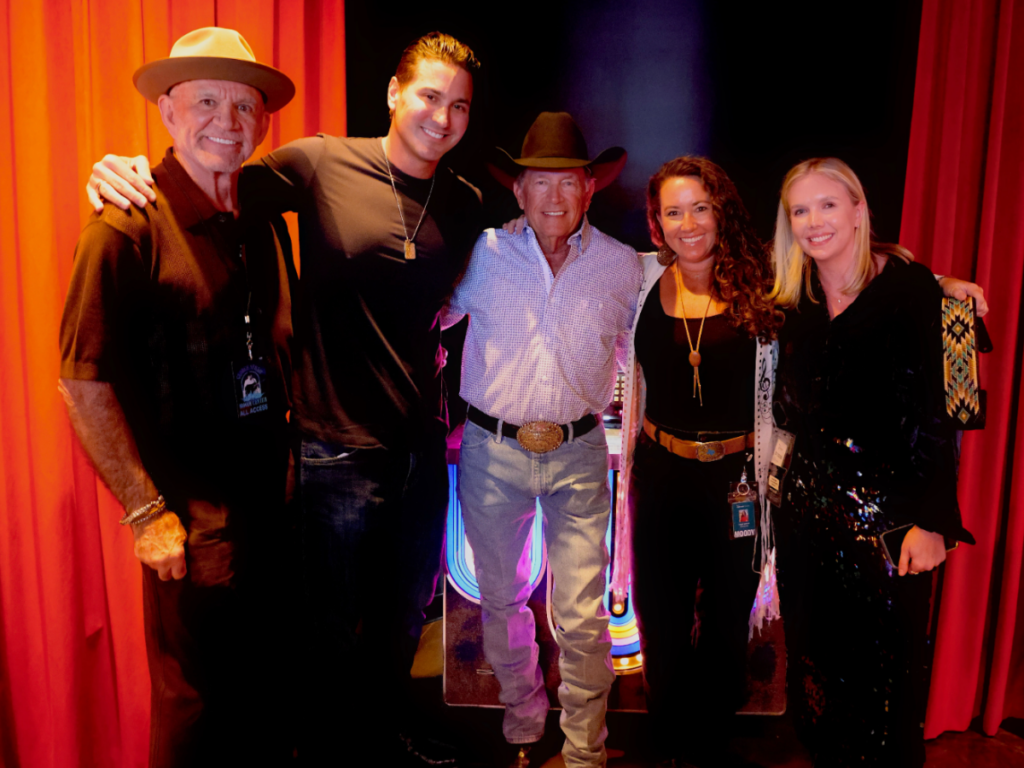
Moody Center unveiled a new backstage lounge dedicated to George Strait at a private ceremony during his historic final weekend at the arena. Dubbed “The Troubadour” in homage to Strait’s GRAMMY-winning album and title track, the lounge reflects both the spirit of his music and his enduring legacy as one of Texas’ most prolific and influential musicians, songwriters and entertainers. The Troubadour captures the feel of a classic Texas honky-tonk. It features a refurbished vintage jukebox programmed with his extensive catalogue, a burnt orange pool table, a restored neon sign, and carefully curated décor. At its heart, The King of Country’s iconic boot prints are permanently enshrined in a bronze plaque embedded in the floor. Moody Center recognizes Strait for his contributions to music and his role in shaping the arena’s early history. Strait performed two nights at Moody Center’s grand opening celebration in April 2022 alongside Willie Nelson. This Spring, he made his triumphant return for a four-night, sold-out series of shows that attracted over 60,000 fans. The Troubadour unveiling The Troubadour dedication, marked by a toast of Codigo tequila shots. It was attended by Strait, his close friends and family, Moody Center executives and representatives from Messina Touring Group. The lounge is reserved exclusively for artists and industry hospitality. “This lounge is more than just a space. It’s a tribute to an artist whose music and presence helped define the Moody Center from day one,” said Jeff Nickler, President of Oak View Group Austin, and General Manager of the arena. “We’re proud to honor him in a way that will be experienced for years to come.” Strait added, “I’ve played a lot of places over the years. To have a space like this honoring the music, the memories, and the fans, it means a lot to me. Thank you, Moody Center and Messina, for such a thoughtful dedication.” “So many touring artists look up to George and aspire to model their career after his, but there’s only one King George. Thank you Moody Center for recognizing his unique contributions with this lounge,” shared Louis Messina. The Troubadour stands as a lasting fixture, reflecting George Strait’s legacy and long-standing connection to Moody Center.

Moody Center dedicates backstage lounge to country music icon Read More »

Whiskey Isn’t a Trend, It’s Tradition maverick-country.com

Whiskey Isn’t a Trend, It’s Tradition

Whiskey and country culture have long been intertwined as a shared expression of place and identity. Long before it became a lifestyle aesthetic, whiskey was simply part of everyday life across the American South and Midwest. It sat on back porches, in roadside bars, and behind the scenes of late-night songwriting sessions. Country music has consistently reflected this relationship. Not in a romanticised sense, but as a detail of lived experience. Whiskey appears in lyrics because it is present in the environment, tied to storytelling, reflection, and social connection. It is less about the drink itself and more about what it represents – time taken, conversations had, and moments remembered. Rooted in the same ground The connection between whiskey and country culture is not coincidental. Both are products of the same environments. The regions that shaped early country music, Tennessee, Kentucky, Appalachia, are the same regions that defined American whiskey. In Tennessee, the steady, methodical approach to whiskey production reflects a wider cultural consistency. There is value placed on doing things the right way, not the fast way. That same attitude underpins much of traditional country, where storytelling and structure take precedence over trend. Appalachian moonshine tells a different story. It emerged from necessity, shaped by isolation and resourcefulness. It shares a similar origin with early country and folk music, both formed outside of formal systems, passed between communities, and grounded in real experience. Modern producers such as Ole Smoky have brought moonshine into regulated markets, but its cultural identity still leans heavily on that independent spirit. Further west, Texas introduces a different tone. The climate accelerates whiskey maturation, producing bold, concentrated flavours. That intensity is reflected culturally as well. Distilleries like Garrison Brothers operate within that same environment, producing bold, assertive spirits that reflect the climate and attitude of the state. Shaping the experience Whiskey in country culture is defined as much by where it is consumed as how it is made. It belongs in places that are lived in rather than designed, roadside bars, back porches, open fields, small venues where the line between performer and audience is blurred. This is where the overlap with music becomes most visible. Live country music venues are not just performance spaces; they are environments built around interaction. Whiskey, in this context, is part of the rhythm of the evening. It slows things down, encourages conversation, and creates a sense of familiarity, even among strangers. The ritual is informal but consistent. A drink poured without ceremony, a glass passed across a worn wooden bar, a quiet moment between songs. These details rarely make headlines, but they define the atmosphere. Holding onto authenticity As country culture has expanded globally, so too has the visibility of whiskey within it. There is now a clear commercial dimension, with brands such as Jack Daniel’s becoming synonymous with the culture itself. Yet the underlying relationship has not fundamentally changed. What continues to resonate is authenticity. Both whiskey and country culture are valued not for how they are presented, but for how closely they remain tied to their origins. Attempts to refine or reposition them too far from that foundation tend to lose what made them compelling in the first place. Within country culture, it is not about knowledge or status. It is about understanding the setting. The whiskey in your hand sits within a wider world, shaped by the same landscapes, histories, and communities that give rise to the music around you.

Whiskey Isn’t a Trend, It’s Tradition Read More »

How TikTok is helping country culture evolve - Maverick Country

How TikTok is helping country culture evolve

Country music has always been rooted in storytelling, community, and authenticity, but the way those stories are shared is changing fast. Once confined to dusty bar stages, local radio, and word-of-mouth followings, country culture is now thriving in a digital world where a song can travel further in 15 seconds than it once did in years. How TikTok Is Transforming Country Music Discovery Social media, particularly platforms like TikTok and Instagram, has reshaped both how country artists connect with their audience and how other aspects of the country lifestyle are shared with the wider world. What used to require label backing and radio play can now begin with a viral clip filmed in a bedroom, a truck cab or a backstage corner of a dive bar. This shift has opened the gates for a new wave of artists who might not fit the traditional mould but carry the same spirit that has always defined the genre. Gen Z and the Rise of Participatory Country Culture What makes this evolution particularly interesting is that it has not diluted country culture, it has amplified it. Fans, particularly from Gen Z, are no longer passive listeners; they are active participants. They film line dances, share covers, showcase their outfits and document their lives soundtracked by country music. In doing so, they are shaping the culture just as much as the artists themselves. The rise of short-form content has also changed how songs are written and discovered. Hooks matter more than ever. A single lyric, a relatable line or a catchy chorus can spark a trend, turning an unknown track into a global anthem overnight. Yet, beneath the algorithms and viral moments, the core of country music remains intact. It is still about real experiences, whether that is heartbreak, freedom, hard work or small-town pride. Expanding Audiences: Country Music Goes Global Interestingly, this digital shift is also bringing country music to new audiences. Listeners who may never have set foot in a honky tonk are now discovering the genre through their phones. The result is a broader, more diverse fanbase, one that blends traditional country values with modern influences. It is not uncommon to see country tracks sitting alongside pop, hip-hop and rock in playlists, reflecting a genre that is no longer confined by boundaries. From Viral Fame to Live Shows: Bridging Online and Offline At the same time, live music has not lost its importance. If anything, the online buzz is driving more people to real-world experiences. Viral success often translates into sold-out shows, festival appearances and packed bar gigs. The journey from screen to stage has become a defining pathway for today’s artists, bridging the gap between digital exposure and genuine connection. Of course, not everyone embraces this change without hesitation. There are debates about authenticity, about whether viral success equates to staying power and about how much the industry should lean into trends. But country music has always evolved, from outlaw movements to crossover hits, and this is simply the latest chapter in that story. The Future of Country Music Culture From honky tonks to TikTok, the landscape may look different, but the heart of country culture remains the same. It is still about telling stories that resonate, building communities that feel like home, and finding connection in the music. The platforms may have changed, but the spirit has not, and that is exactly why country continues to thrive.

How TikTok is helping country culture evolve Read More »

Scroll to Top

 (keeps playing while you browse)