3 March 2017

Marty Stuart To Host Uk Premiere Of ‘Born In Bristol’ Documentary At C2C Festival On Sunday 12Th March

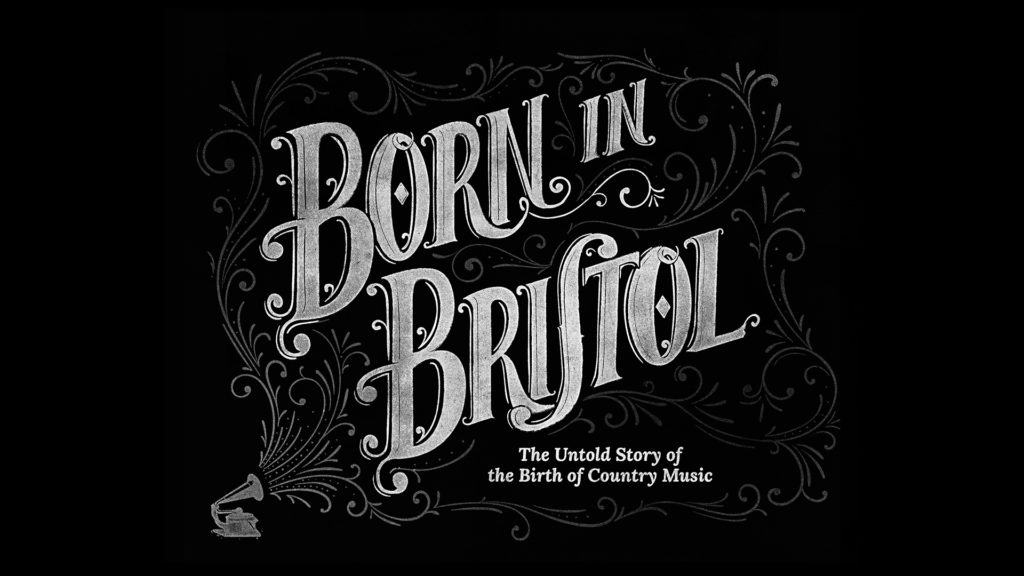
54-Minute Film Tells the Untold Story of the Birth of Country Music LONDON, UK: To celebrate the 90th anniversary of the birth of country music, Country to Country (C2C) festival in London will present the UK premiere of the documentary ‘Born in Bristol’ at The O2’s Cineworld Cinemas on Sunday, 12th March 2017 at 1:30pm, including a special question-and-answer session with Marty Stuart moderated by BBC Radio personality Baylen Leonard, himself a Bristol, TN native. Stuart, who will perform on the C2C main stage later that evening in support of his new album, ‘Way Out West’, also appears in the film, which tells the story of the July 1927 music recording sessions organized by Victor Recording executive Ralph S. Peer, an event Johnny Cash called, “the single most important event in the history of country music.” Produced by the Tennessee Department of Tourist Development and Virginia Tourism Corporation and directed by Sundance Award-winner Chusy, ‘Born in Bristol’, which received shortlist consideration at the 2016 Cannes International Festival of Creativity, was filmed on location in Bristol, which straddles the Tennessee-Virginia state line in the U.S., and Nashville. C2C wristband and ticket-holders can attend the premiere by visiting the Tennessee Tourism booth at the Town Square and registering to win a trip to Tennessee, to receive a free ticket. There will also be a screening on Saturday 11th at 2:00pm, without Q&A.   WHO: Country superstar and Tennessee ambassador Marty Stuart… WHAT: …will participate in a 30-minute question-and-answer session moderated by BBC Radio personality Baylen Leonard at the UK premiere of ‘Born in Bristol’, a documentary profiling the untold story of the birth of country music. WHEN: 1:30pm GMT Sunday, 12 March, 2017 (Doors at 1:00pm) WHERE: C2C Festival; Cineworld Cinemas at The O2, Leamouth Peninsula, London SE10 0DX   BACKGROUND: ‘Born in Bristol’ features re-creations of the 1927 recording sessions, where legends including Jimmie Rodgers and The Carter Family were discovered, as well as appearances by Dolly Parton, Emmylou Harris, Vince Gill, Steve Earle, Ashley Monroe, Sheryl Crow, Eric Church, Shannon & Ashley Campbell and Quicksilver, each of whom contributed music tracks to the 2015 release ‘Orthophonic Joy: The 1927 Bristol Sessions Revisited’, produced by multi-Grammy Award-winner Carl Jackson and featuring an historical narrative by Eddie Stubbs, the voice of the Grand Ole Opry. Check out the trailer here.

Marty Stuart To Host Uk Premiere Of ‘Born In Bristol’ Documentary At C2C Festival On Sunday 12Th March Read More »

lucie silvas

Interview: Lucie Silvas – Another Country

Lucie Silvas writes from the heart, and that can be a pretty dark place, as she tells Teri Saccone. Fans of singer-songwriter Lucie Silvas can be assured that pretty much everything you need to know about her can be found in her wonderfully-crafted lyrics and music. Yet there is, of course, more to her than songs so we won’t deprive you of an interview. Before we get to that, however, we should mention that Silvas is in fact inextricably linked personality-wise to her music, and there is no pretence surrounding her. She’s as open, sweet, yet razor-sharp, as her lyrics suggest. Furthermore, Silvas is exceedingly bright and personable. For the release of her long-awaited third album Letters to Ghosts, Lucie returned to the UK (where she was born, she was raised for a time in New Zealand) to discuss her career, the ever-evolving music industry and the sweet life she has built in Nashville. Letters to Ghosts follows two prior studio forays for the Tennessee-based artist: Breathe In (2004) and The Same Side (2006). Her music may not be traditional country but she does embrace gospel, soul and rock within her palette. Technicolour Presence The prime motivator behind Silvas’ latest album (released Stateside earlier this year) was a past relationship which ended before her marriage to country guitarist John Osborne (he of Brothers Osborne). Letters to Ghosts’ lyrics reveal the dark and sometimes ugly side of break-ups. The pain is palpable within the tracks, whether the vibe is ballsy or sad, as Silvas is never beige: she’s always a technicolour presence. Says Lucie: “I wrote the album in the wake of the ending of a big relationship, and it was in the healing process of it that I realised the many things I had done wrong and the flaws I had. Until you’re ready to let go and start over, you’re in a holding pattern that won’t let you move forward. This album is the essence of that: of trying to move on, facing who you are, and changing too. Roots is a prime example on the album, glistening with that pure emotion Lucie purveys. According to her, Roots was “Especially cathartic because that plagued me for so long; so the whole letting go of the past part was liberating. Writing can be such a learning curve for my emotions. I was talking myself out of a storm. I still have trouble singing that one sometimes, as it feels more poignant to me than most.” Roy Orbison Another provocative cut off LTG is Silvas’ audaciously unique take on the Roy Orbison classic You Got It.“My parents used to play Roy Orbison a lot when I was a kid and I have always thought this to be the most perfect song. The recording is one of my favourite sounding records ever made. So I couldn’t just cover it in the same way or even attempt to live up to such a powerful original. I made it my own by bringing it to its simplest form: not much instrumentation, just piano and an electric guitar, and the vocals. The lyrics reflect the feeling of finding the kind of love that makes you feel so levelled and understood. I found that when I met John, and this recording is for him.” Inspired Performance Furthermore, her inspired vocal performance on Smoke proves that Lucie’s is a voice to be reckoned with. LTG is a good introduction for those unfamiliar with Silvas, as it contains a solid array of tunes with some very strong songwriting. Silvas grew up partly in New Zealand, where her father is from. Her mother is Scottish and was a budding singer but came from a strict Christian family who discouraged anything except classical singing. “And my dad is Jewish,” she tells us, “so I had a mixed upbringing both culturally and musically.” Lucie left London, relocating to Nashville, almost a decade ago. It wasn’t planned. Basically, an old English friend lured her there. “My dear childhood friend John Green, who I’ve known since we were 14, suggested it to me in 2007. We had a band as kids. He asked me to come and check it out and he said I’d meet great people – and the first time I was there I met people I’m still friends with today. So I went out for a few days but ended up staying five weeks and never saw England in the same way again.” Intoxicated “Weirdly enough,” she continues, “the music I’ve always done never made more sense to me until going there, and I fell in love with the place, and I saw people making music in a way that was more inspiring to me, and I was intoxicated by it. Little Big Town, Miranda Lambert and Kacey Musgraves invited me on their tours, so that helped me out. Living in London I felt like I had to have music or my personal life but not both, as I was travelling and it didn’t work out well. In Nashville, I saw artists who had a normal life and were pursuing their dreams. I want to have a life outside of music too. Being there in Nashville I have both.” Rootsy Americana LTG is mired in rootsy Americana with influences including soul and gospel. One track, Shame, embodies more of a Nashville vibe in its instrumentation and style. But instead of simply appropriating a country flavour, the sound has seeped into Lucie’s lexicon quite organically, not only from her life in Music City but also from growing up with the sounds of Haggard and Cash in her childhood home. We ask her if she thinks that she’s not as commercially-accepted as she might be because she’s not country enough for Nashville? “It’s been a long road,” she replies. “I just signed the deal with Decca in the UK and doing it on your own independently, as I’ve done, is hard, although a lot of people also do it this way.

Interview: Lucie Silvas – Another Country Read More »

vince gill

Interview: Vince Gill – The Mayor of Music City

20 grammys and countless hits later, Vince Gill is still at the top of his game, writes Paul Sexton. On our way to Nashville’s hallowed Ryman Auditorium, we mention to a record-company person that we’re going to meet Vince Gill. “Ah yes,” they reply, with a warm smile. “The Mayor of Nashville.” It may be an honorary title, but Music City has no greater ambassador than a 20-time Grammy winner genuinely loved and respected by everyone involved in the business, and many more besides. He’s one of those for whom no surname is required: it’s just Vince, country music’s close family friend, Nashville’s favourite adopted son for decades. Not bad for a bluegrass picker and Beatles fan from Norman, Oklahoma. When we meet backstage at the famed venue, known to all as the Mother Church of Country Music, Gill is sitting alone in a small room strumming and studying potential tunes for an appearance at an all-star radio showcase. We tell him about his affectionate appellation. “I haven’t been paid yet,” he laughs warmly. “But I love it here, I love to help out, I love to chip in and do my part, and I think I always have, ever since I’ve been here. I made my first trek here 42 years ago, and made one of my very first records here. So I’ve always been drawn to the city. I love the community of it, the spirit of it, the kindness of it. This place is surrounded with a lot of really kind people, and it makes you willing to want to help out.” There was, he confides, at least one moment of doubt, very early on. “I moved here from Southern California, which is 75 and sunny every day. I showed up here and it was 17 below zero. It was freezing. ‘What have I done?’ “I didn’t move here until ’83,” Gill continues, “but I made a boatload of trips here to work on records, and work with other people and tour, so I had about eight good years of a lot of time in Nashville and always felt like I would wind up here. That opportunity was finally the right time to come, and I’m not going anywhere else, that’s for sure.” All this time later, it was only right that, as the CMA Awards prepared to mark its 50th event last November, the all-star single Country Forever that marked the occasion featured Gill among its all-time greats, alongside Dolly Parton, Willie Nelson, Charley Pride, Ronnie Milsap, Randy Travis et al. As he prepares to turn 60 in April, Gill is a statesmanlike representative of the music and the city he adores. But his role is far more than that of a country figurehead. He’s as deep in the trenches of recording, performance and collaboration as he always was, and his diary for last year was as packed as ever, with two album releases inside just seven months. His elegant, 14th album in his own name, Down To My Last Bad Habit, was followed in September by a delightful new endeavour with his part-time compadres The Time Jumpers, entitled Kid Sister. Time traveller 2017 looks every bit as eventful. After finishing last year with his Christmas At The Ryman shows with his wife of nearly 17 years, Amy Grant, he’s swiftly back out on the road, and in March will reunite with his pal Lyle Lovett, for the third year running, on a nine-city US schedule. The humour, you can bet, will be bone dry. On 12 February, Vince has a date at the 59th annual Grammy Awards, courtesy of not one but two nominations for that Time Jumpers set. As both an ever-active songwriter and a fervent traditionalist, both will have given him great satisfaction: Kid Sister is nominated for Best Americana Album, and its title track, his own composition, is up for the Best American Roots Song gong. Down To My Last Bad Habit, I tell him, would be worth the price of admission for the title alone. He laughs. “The title track is a song I wrote with Big Al Anderson, who was part of a pretty legendary band here in the States called NRBQ, a lot of people’s favourite rock ’n’ roll band in history. “I got the title from a conversation at breakfast. I was talking to a friend and said ‘What are you up to?’ and he said ‘Well, I’m doing alright, I’m down to about my last bad habit,’ and I said ‘Man! May I please have that? I want to write a song with that in it.’” This was, by design, an album often displaying the crossover, soft-rock side to which Vince’s magnificent, mellifluous voice and dexterous guitar playing are so well suited. Indeed, four years before he made his debut in his own name with the Turn Me Loose record of 1984, Gill’s honeyed tones infiltrated the American pop Top 10, when he sang Let Me Love You Tonight, with his early band the Pure Prairie League. “It’s fun for me,” he says of the solo album. “I don’t think it’s a very traditional country record for me, in that I did a record two years ago with Paul Franklin, the great steel player, called Bakersfield, where we played half Buck Owens songs and half Merle Haggard songs. Then when I play with The Time Jumpers, that really gives me the opportunity to invest in a lot of traditional country music – real twangy, the stuff I really love. “So this record, I had a little more freedom to chase myself as a guitar player, and not try to have it be so steeped in that [tradition]. But there’s one on there that’s a real traditional country song I wrote for George Jones after he passed — another one of our great icons that should be on the Mount Rushmore of hillbilly singers.” The song in question is the typically graceful album closer, Sad One Comin’

Interview: Vince Gill – The Mayor of Music City Read More »

Scroll to Top

 (keeps playing while you browse)