
Amy Speace

Singer-songwriter Amy Speace got her big break in music when she was spotted by Judy Collins. She didn’t actually start writing music until she was about 28 years old; she had enrolled at college to study English and Theatre but was still unsure of her future path in life. “I didn’t know what I wanted to do, I had all this performing in me. I was a musician, I played the piano when I was three and sang, I thought I wanted to be an opera singer for five minutes, because I love opera and I love the passion, but I have never met an opera singer who was really happy, loose and free.” After college Amy attended the National Shakespeare Conservatory to study acting but found that she ended up having to take a lot of sub-par acting work to make a living, this disappointment helped steer her towards music and her eventual calling. “At the time I started writing music I was living in New York City as an actor and a director, I just started playing open mics and I think maybe it was part real hard work and part blind faith that I was at a coffee house when Judy Collins heard me. I really was undeclared at that point, like all I knew was that I had to be on stage and I had something to say, but wasn’t sure what it was, or how? Whether it was to be as a play writer, or a songwriter, or an actor, no idea? Then Judy saw me and she told me how I reminded her of herself at a young age. Then I was able to open up to her and say: “I’m not sure how to do this and have a career?’ and she just said: “You have it, just keep going.’ I think that was the turning point for me, so it kept me going. It actually was the moment that I decided that I am a songwriter and singer and this was what I wanted to do for the rest of my life.” Amy’s albums tend to draw on what is happening to her at the time of writing the songs. THE KILLER IN ME followed a divorce and LAND LIKE A BIRD was written just after moving from New York to Nashville about two and a half years ago. “My album THE KILLER IN ME was really me trying to make sense of my divorce. I was married for 10 years, he’s a good friend of mine but never was my soul-mate and I think a lot of people find themselves there. I think I was trying to do the right things for much of my life. That record was like an exploration of that stage of my life, as in I am no longer 20 so how do I shed all of this and get out of this without hurting anybody. So when I finally did emerge from that I was living by myself and it is like when you are desperate to kick down a door, banging your head against the door, then somebody opens the door behind you and says “no, come to here’ and that is what happened with Nashville.” “Over the years I have been going to songwriter festivals in the States and I needed a Nashville songwriter to say that I need to be in Nashville. I had angels all over the place, songwriters like Jon Vezner who became a mentor of mine, so did Judy [Collins] and Beth Nielsen Chapman. Then I randomly ran into the guy who runs my label, who heard me and just said: “I want to work with you and you really should come to Nashville.’ He introduced me to this whole sort of sub-culture of Americana singer-songwriters in Nashville. I felt so at home I moved there on a whim, like two weeks later my van was packed and I was gone. I left behind my whole family, an ex-husband, my label and management and started all new in Nashville.” This led nicely into her next album LAND LIKE A BIRD, which is centred around leaving people and places close to her and it has a few songs that say goodbye. “Manila Street was a street that I lived near in Jersey City, right across the river from the Trade Towers. That whole episode was a turning point for me, so when I lived across from that area, this one street I would have to go down on the way to the subway train to get into Manhattan, where I played music and worked. It was a kind of ugly block of houses, but they had woven these roses through the chain link fences that surrounded these graffiti clad concrete block buildings. I had been touring and I came home and they had burst into bloom and when I was moving and letting go of relationships and people in my town, that was the image I used to write that song, the idea of flowers and things just coming and going, the idea of permanence…everything changes, just kind of owning that and using that metaphor.” “I think Had To Lose was a kind of resignation to moving on, I feel like it is a hopeful song. The first line is “As I lose the love of my life I had to lose,’ sounds really sad but the whole song has this sort of uplifting thing about you had to do it, to get where you are you have to let go of some things that are painful. That is why I chose Galbraith Street which is Ron Sexsmith’s song, I feel like it comes right out of my song Had To Lose, I love Ron’s song as it is about letting go of childhood.” The other tracks on the album covered the other part of moving. “I think what happened was I was letting go of love as I

Amy Speace Read More »

Fairport's Cropredy Convention

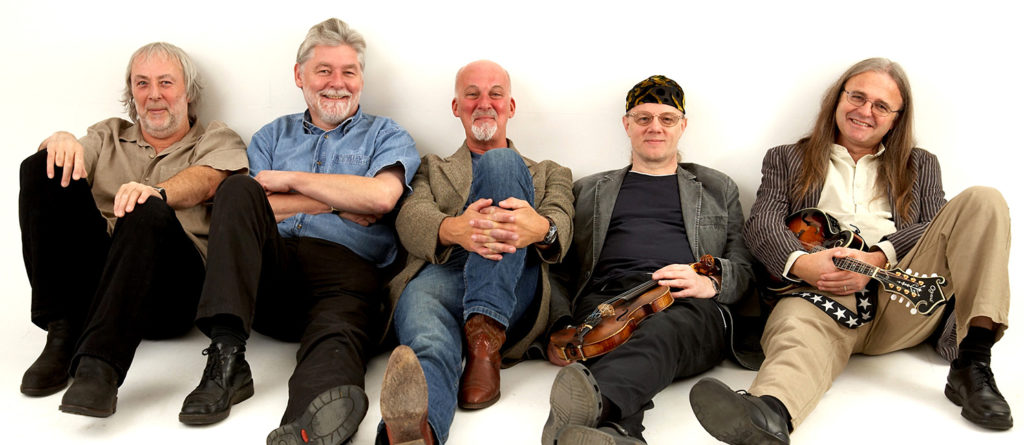
8, 9 & 10 August 2013 Fairport’s Cropredy Convention is widely acclaimed as the ultimate celebration of folk-rock. Yet, increasingly, the tens of thousands of music-loving folkies who invade the normally tranquil village of Cropredy in North Oxfordshire for three days each August, are treated to a more eclectic range of quality music. Festival founders and folk-rock originators Fairport Convention are still the principal Cropredy headliners, but the bill this year includes several distinctly non-folk performers such as 10cc, Levellers and Nik Kershaw. Plus, amazingly, the original shock-rocker Alice Cooper will also be there this year to terrify regular Cropredy-goers with his stunning horror-fuelled stage-act on the opening night. At the other end of the spectrum are the classical chart-topping Mediaeval Baebes with their beautifully evocative musical adaptations of medieval writing sung in a variety of languages, all prettily accompanied by antique English instruments. Nick Dent-Robinson talked to members of Fairport Convention about this year’s festival.And he sought reactions from Mediaeval Baebes’ singer Katharine Blake plus the inimitable Alice Cooper about the prospect of them appearing on the same bill at Cropredy 2013. “I’m just sitting here trying to figure out how we do our songs in a kind of folky way for the Cropredy festival,” Alice Cooper laughs, as he talks to me during a brief break in his current East Coast US tour. “But, hey, we just love to terrorise those groovy, green-worshipping, tofu-chomping folk-rock followers. We play some folk festivals in the US and it is always fun. Like going to summer camp-and then here comes Alice Cooper on at midnight…some terrible ghost, spooking all the kids and wreaking mayhem and horror at the end of camp-out. We’ve always enjoyed our scary reputation-and still do. We’ll give the Cropredy crowd something that’s totally the opposite of everything else they’ll be seeing and hearing!” “Our act is pure rock vaudeville, dark in places, funny in places but with huge pace and there’s no chance for anyone to catch their breath. The theatrical effects have improved down the years. Now we have this thing where Alice comes on stage in a huge shower of sparks, like a walking ball of fire-and you always hear this great gasp from the audience. I love that because it means, ‘We’ve got ’em, we’ve got ’em already!’ I never go out there thinking, ‘Boy, I hope you like us tonight.’ I’m like, grab ’em by the throat…make ’em like you! “Of course I’m one of those guys who knows people want to hear all the hits and we never shy away from that. There were 14 ‘Top 40’ hits and we do them all, as close to the original as possible. Underneath the theatrics which we hope everyone will enjoy, we are a guitar rock band and we have three brilliant guitar players-so I let them play…great live, raw music. Plus we always end with Elected and School’s Out otherwise our audience would wonder what we were doing. Though we have a lot of younger fans and, sadly, in this modern electronic, techno-age, a lot of these kids have never seen real, live rock music. They’ve never seen a drum solo or a good guitar solo. In fact the retro part of our show is new to them. Many of today’s major bands have everything taped, but we could never do that…my band has got to play every note for real. I’d be so embarrassed if we didn’t. Despite our reputation for theatrics, the music is important to me-and always has been.” It is 41 years ago this Summer-back in 1972-that Alice Cooper’s video for School’s Out was banned from the BBC after complaints from pioneering broadcasting standards campaigner, Mary Whitehouse supported by the MP Leo Abse. This gave Alice massive publicity and School’s Out reached number one in the UK charts within days. Alice responded by sending Mary Whitehouse big bouquets of roses to thank her for the publicity. “I remember all of that well. It was the greatest single career boost I ever had. Fantastic! Being banned, creating controversy, was all part of the career passage for Alice Cooper. It wasn’t planned but we never shrank from exploiting it, either. I am eternally grateful to Mary Whitehouse.” These days Alice is almost an establishment figure, though. He and his original band members were inducted to the Rock and Roll Hall of Fame in 2011 and he has a star on the Hollywood Walk of Fame. He owns a restaurant, enjoys classical music, hosts a popular radio music show and his biggest passion is golf which he plays to professional standard. “Yes, golf is my new addiction,” agrees Alice. “I used to drink every day but now I play golf; it is therapy. Though it is frustrating on tour to get to places with fine golf courses and discover they are closed at the times I am free to play. Britain has some of the best golf courses anywhere and if there’s good golfing near Cropredy, I hope it will be open when I am there.” “The early days in England for me were really great,” recalls Alice. “You see almost all of my biggest heroes in rock were British. Starting with The Beatles. Their lyrics and George Harrison’s brilliantly economical, innovative guitar work are still amazing to me. George Harrison never played a single note that didn’t belong. And as soon as he got done, he got out. Many guitar players, they noodle. It is nervous energy and they just noodle when they are playing, filling all the spaces that don’t need filling, spaces that ought to be left there. George never did that. He never played over anything. “That’s partly why The Beatles music is so great…nothing was ever allowed to get in the way of anything else. They had a brilliant producer in George Martin. But The Beatles had developed this economical style in their live performances. The vocal is always clear and then when the guitar comes

Fairport's Cropredy Convention Read More »

New To You… Jules Winchester

New To You… JULES WINCHESTER It is not often that respected professional musicians press me to interview someone who just released a first album-but that is what happened after Jules Winchester launched SOMETHING IN THOSE EYES, her debut album. The record is a joy, as has been widely recognised by the music press. Every track on it is strong and the album showcases perfectly the mellowness and range of Jules’s attractive voice, her talent for writing affecting lyrics with lilting melodies and her clever arrangements for acoustic and electric guitar plus keyboard. Jules, a young and energetic 39, has been writing songs and playing her guitars and keyboard for a quarter of a century. And for two decades she has been busily recording her work at her Sussex home. But it was not until 2009 when Jules met and started singing with Doris Brendel (of The Violet Hour and daughter of the world-renowned classical pianist Alfred Brendel) that her potential as a writer and performer was finally recognised. As Doris has recently commented, “If Jules had started playing live 20 years ago she would already be a household name.” Many others share that view. So, now that Jules is finally out there, performing live gigs and with her album promoted in the music magazines, it seemed timely to talk to her-as people were insisting I should. We meet on a sunny summer’s day in the pretty tudor-style cottage near the sea in West Sussex which Jules shares with her husband, BMW technician Alan Winchester. “From a young age I always loved music,” Jules recalled. “My mother plays piano-she’s learning the clarinet and mandolin now-and my brother Neil played a bit of guitar, so there was a lot of music at home. The first tune my mother taught me on a battered old guitar we had was Elvis Presley’s Wooden Heart. My parents listened to Elvis but also to Glen Campbell, Connie Francis, John Denver, the Mamas and Papas plus Joe Brown. They still go to see Joe Brown whenever he is playing locally. He’s a great guitarist and really good to hear live. I have always liked The Pretenders and admire Chrissie Hynde but my own major influences were the American singers Tori Amos-who is classically trained and a brilliant pianist and songwriter-along with Tift Merritt, Allison Moorer plus Trisha Yearwood. I love anything with a good tune, nice harmonies and an interesting lyric. One of my favourite songs is Dreaming Fields by Trisha Yearwood which is one of many beautiful compositions by American singer Matraca Berg. It’s a wonderful song that always reminds me of my grandparents who are no longer here…makes me reminisce. “By the time I was eight I’d had guitar lessons and was picking out tunes and singing along-I always had a good ear. Then I started to write songs and in my early teens I went to a nearby studio to record a song I’d written called Tears of Love. The local radio station-now Heart FM-played it but I was never able to persuade a record company to use the song. Later I bought a 4 track mixer and, with a guitar and a keyboard plus a recorder, I started putting my music together at home. Technically it was a challenge but I always persevered. I did Music ‘A’ level at school and gradually I taught myself how to do interesting arrangements, too. I kept adding to my recording equipment so after a while I could make quite good quality cds. “Then I had one of my songs-Walking Up The Aisle-recorded in Nashville. Later I visited Memphis and Nashville but I still failed to get anyone interested in releasing the song. There were lots of rejections, but I never lost heart. All the time I was trying to perfect my song-writing, improve my arrangements-trying to keep it simple but interesting and memorable. I’d accumulated several guitars-a few acoustic guitars and a Fender Telecaster. But the thing I treasure most-apart from my husband! -is my Gibson guitar. All of this helped my recording work. Most of the time I just shared what I was doing with family and a few close friends. Everyone was very supportive, as they still are. At one point I did try singing and playing with a band but the others seemed more interested in making quick money; I just wanted to perfect the music. So I went back to recording on my own at home.” “Things finally changed in 2009 when I met Doris Brendel. Initially we were in touch through MySpace. Doris was making her album THE LAST ADVENTURE with guitarist and record producer Dave Beeson and she invited me to do some backing vocals. I found myself singing alongside professional performers like Aitch McRobbie, Lynne Butler and Julie Harrington. They made me so welcome and I learned such a lot from them…it was a really good experience.” Jules is too modest to tell me this, but Doris Brendel was very impressed with her. She suggested Jules record one of her compositions-The Book-professionally with Dave Beeson and Doris provided the backing vocals for Jules. This song now appears as the last track on Jules’s SOMETHING IN THOSE EYES album. Doris also encouraged Jules to start performing live in small venues. “I began performing in local clubs. There is one in Arundel and another in Pulborough that is run by Gary Holder, who is a friend of Herbie Flowers, the brilliant bass player. I was terrified at first but the audience reaction was really good. I remember singing Country Roads at Pulborough and suddenly the audience were all singing along and clapping and cheering at the end. People were coming up to shake my hand. I was overwhelmed…a wonderful experience to get that sort of reaction. But I have been lucky, audiences often respond really positively to me.” Jules has now gained a lot more experience, playing live. She’s appeared at many Sussex venues including The Willows Folk Club, Findon

New To You… Jules Winchester Read More »

FOLK – A film by Sara Terry

A film by Sara Terry Sara Terry, the producer/director of FOLK, is an award winning journalist-in print, public radio, and photojournalism. FOLK is her second documentary. The project web site describes FOLK as “a verite character study, part music documentary, part road trip movie-a multi-layered examination of three artists at dramatically different points in their lives, faced with the challenge of how to be heard in the 21st-century version of this distinctly American art form.” Is it distinctly American? FOLK opens and closes at the annual-late February-International Folk Alliance Conference in Memphis, Tennessee, albeit separated by 12 months. There we meet the central characters-Dallas based solo artist Dirk Hamilton, Austin’s Flying A’s-husband and wife duo, Hilary Claire and Stuart Adamson, and finally the trio of California based John Elliott, Texas immigrant Raina Rose and New York’s Anthony da Costa, supported by Californian Andrew Pressman (upright bass) -and witness them dealing with life over a period of twelve months. Seeking, at the outset, to define the 21st century musical contexts of FOLK, relative to the fame (and therefore financial) factor, James Lee Stanley offers “Nobody here thinks they’re going to become The Beatles. Everybody is here playing music because they love it to death, no matter what that costs.” Radio producer Jen Hitt highlights the genre’s tradition and roots “Folk music has always been a personal experience-meet your audience, remember your audience-there’s the basic economics of it, folk can’t exist without community. When you’re not targeting a mass audience, when you’re targeting people’s hearts and minds you need that community to support that endeavour.” Finally, music critic/author Dave Marsh employs a snapshot from the past and suggests a future possibility. “Charles Seeger, Pete’s dad, used to say that you measured a country by the number of people who made music in that culture. We need to get back to a culture where people make music for joy not for money.” Indiana born and raised in Northern California, currently aged 63, Hamilton’s back story runs to first making music professionally aged 15. Signed to majors ABC and Elektra/Asylum during the mid/late 1970’s, thrown off a Warren Zevon tour-NOT his fault-Elektra dropped him. He stopped making music for a time. There are shades of Detroit’s Rodriguez in Dirk’s early 1990’s discovery that he was a rock star in Italy. For two decades his income has mainly come from touring there. In FOLK…Dirk collides, head on, with unfamiliar “networking” avenues at IFA, and recalls frequenting The Roxy in the 1970’s-a rock club. Failing to prepare a picture postcard listing his private IFA showcases he groans “I grew up with managers and I think I got spoiled.” Out in California, Dirk performs Thug Of Love in McCabe’s Guitar Shop, a long established Santa Monica folk club and wanders the beach area where he once lived. Former Rolling Stone reviewer Steve Pond describes Dirk as “Cranky and weird. He never made any bones of the fact that he hated the music business.” A friend from 30 years ago, Patti Hartman, finds him and begins directing his career. There’s archive film of Dirk and his electric band, circa 1979. Dirk takes his kids for pizza, teenage guitarist Chavis and young Phoebe. “I have real relationships with them. I miss no opportunity to tell them I love them.” In NYC for a gig, Dirk witnesses a protest march by young people. “This is like the 1960’s, I never thought I’d see it again.” Dirk is seen performing in Italy. At the close he reflects “I’m always growing as an artist. I love what I do. It’s hard for money.” A year on in Memphis, postcard in hand, he reflects “I love everybody, I’ve learned.” Both previously married, Hilary and Stuart Adamson first appearance is at a private IFA showcase. Hilary met Stuart at a Kerrville Folk Festival song circle circa 2005. She attended Kerrville Song School to learn to play guitar. They began working together. “He needed a harmony chick on his second album.” Stuart “We came together when we really needed each other.” At the legendary Ardent Studio, with producer John Jennings (Mary Chapin Carpenter), Hilary records a vocal. Jennings calls her “A force of nature” and adds “In a fair world, half the songs on this record would be big hits.” In a tearful scene Hilary confides “This whole music thing saved my life,” is seen co-helming an IFA house concert seminar, and teaching an Austin school choir. Stuart reflects “I was teaching full-time. I’ve been substituting some. Trying to keep my head above water then life happened.” On local tv station K-EYE they’re seen performing. Driving home, they dream of performing on Austin City Limits, Letterman, Saturday Night Live and the Grammy Awards. There’s a segment from the Flying A’s debut on Kerrville’s main-stage. Unlike Hamilton, we don’t see Stuart’s kids. Financial pressures eventually dictate Stuart returns to teaching, while Hilary tours supported by Austin musician Danny Britt. Stuart “I don’t want it to end.” They go for marriage counselling. Hilary “There were times when I thought I was going crazy. He had a really tough year.” As for their music “It’s not about the dollars at all. This is my life and I love it. It’s such a gift to have a husband and a partner in life and in music that feels the same way.” While Elliott, Rose and da Costa are seen criss-cross the country “on tour,’ the focus principally falls on Austin based Raina and boyfriend Andrew. At an IFA showcase the trio are seen performing Elliott’s Love Found Lost and Rose’s Let Me Down Easy. Raina “I love playing with other people, I love harmonies. That’s the one thing I miss about being solo, there’s nobody to sing with.” On life as a performing musician, “The major labels are dinosaurs. The independents are wonderful, but there’s too many of them. The internet created a middle class of musicians, but also created a lot of white she noise. Any way

FOLK – A film by Sara Terry Read More »

American Idol Gone Country

Taylor Hicks takes the Nashville road to new album If the music industry is a game of chess, then Taylor Hicks is the black knight, carving an indirect path across the board. Equally as likely to move forward as back, he is more than likely to give his hips a good shake as he goes. He was born to the blues, raised on soul and schooled in the dimly lit bars and clubs of the South. He has since danced on Broadway, sung the blues in Chicago and headlined in Las Vegas. Now Taylor Hicks is writing a country record. He has never fitted the mould. The American Idol winner stood out from the beginning. More salt than pepper in his hair, Taylor’s appearance belied the 28 years stamped on his driver’s license, prompting officials to check and recheck his credentials. In the audition room he surprised with a compelling version of Sam Cooke’s “A Change Is Gonna Come”-hands clasped behind his back and torso swayed by the emotion of the verse. The power and tone of his voice impressed and the enthusiastic approval of two judges was enough to send Taylor to the Hollywood round. Head judge, Simon Cowell cast the lone dissenting vote, convinced of the singer’s limited commercial potential. As the season progressed, Taylor captivated a growing television audience with songs and performances that set him above pop music standards and apart from his less experienced competition. There was soul in his voice as he sang “Takin’ It To The Streets” by Michael McDonald and “Trouble” by Ray LaMontagne. He evoked memories of Otis Redding and Joe Cocker with renditions of “Try A Little Tenderness” and “You Are So Beautiful”, respectively. While others performed behind the microphone, Taylor used the entire stage and audience to his advantage, dancing in the aisles with an endearing clumsiness. He was delightfully and decidedly different. Denied the use of an instrument onstage, Taylor circumvented the rules by blowing blues harmonica offstage, yet in full view of the television crews. He sang and danced with an air of funkiness. If the camera moved left, he moved right. He refused to dye his grey hair or change his quirky performance style. He attempted (although failed) to organise the American Idol finalists as a bargaining unit. He declined his American Idol coronation song and was given another. Taylor Hicks brought millions to their living rooms, glued to the television every Tuesday and Wednesday evening for months. He brought passion to his performances and smiles to the faces of the “Soul Patrol’-the fans who offered their fervent support throughout the competition. He sang with heart, laughed with abandon and charmed a willing audience. On finale night he sang “Do I Make You Proud”, and the answer from viewers was a resounding yes. On one of the decade’s highest rated television shows, and following a nationwide poll that tallied more than 63 million votes, Taylor Hicks was named the fifth season winner of American Idol. Move the chess piece two triumphant squares forward, one cautious square to the side. The newly crowned Idol created ripples within days of his coronation. In a May 2006 interview with Rolling Stone magazine, Taylor described his talent show tenure as: “…dancing with the devil…’ referring to the commercialism of the Idol business machine. Controversial at the time, his remark reflected the mindset of a veteran musician, one who had spent more than ten years on the road knocking on doors, singing for pennies and looking for the break that would lead to a record contract. As Taylor told a scowling Simon Cowell: “I want my voice heard,’ the talent show competition was simply the means to an end. Victory in hand, Taylor planned to use his newfound fame to showcase his original roots music and talent. There was no expectation of, nor the desire for the glamour of pop music stardom. As a child, Taylor realised very early that music was his calling. He studied the great soul musicians, Otis Redding, Sam Cooke and Marvin Gaye, amongst others. He listened to Hank Williams, George Jones, and Johnny Cash-the heart of country-and to Ray Charles who brought modern soul to country music. He sang for family and friends, and at the age of 15 made a casual purchase at the local flea market. An old harmonica proved the catalyst for an intense focus on music performance. Whilst still a teenager, Taylor was already singing the blues and playing the harp in smoke filled bars; his youth disguised by the occasional grey hair. By the age of 18 he had picked up a guitar and penned his first song. “In Your Time” would later become the title track for the young musician’s first album, pressed and self-released at the age of 21. That album-as well as Taylor’s subsequent independent recordings-offers original music that easily crosses genres. While there are songs clearly written with a blues or rock intention, others are easier to brand as roots or country music. One of the strongest songs from the first release, “The Fall” laments the end of a relationship. Written for simple acoustic guitar and given a subtle emotional delivery, the break-up song borrows deeply from traditional country music for both subject and style. From 2005’s UNDER THE RADAR, “The Deal” and “Hell Of A Day” confirm a consistent country soul influence on Taylor’s original songwriting. Taylor has described his music as a fusion of styles-country, rock, blues, soul and Cajun spices all tossed into a cooking pot, stirred, and served with a generous side of harmonica. He credits the diverse musical flavours of his southern home base for guiding his writing and performance styles, but might also cite the influence of mentor Keb’ Mo’. Like his student, the legendary blues musician defies categorization. When asked, Keb’ explains that his music is not strictly blues, but the sum total of all his musical experience: “I’m a product of the kind of music I listened to,

American Idol Gone Country Read More »

River Seven of Canada On The River Ouse in England

Maverick finds out more about Michael Bongertman from River Seven Michael Bongertman is the lead singer and guitarist of the Canadian three-piece rock band River Seven, who released their exciting self-titled debut album in February 2012. With Michael in the band are bass guitarist Peter Anzelmo and drummer Tony Carpino. The band manage to mix the styles and sounds of John Mayer and Maroon 5 with those of Jamiroquai and Simply Red. Their music transcends genres, blurring the lines separating rock, pop, country and neo soul, proving that genres are just there for guidance and direction. My opinion has always been that the music anyone listens to should be put into just two folders-like or dislike. In other words try doing what I do, listen to everything and then make up your own mind what you enjoy. When I met up with Michael, he actually agreed with me on this. “It is the only way to really be a music lover. I find it strange when I meet musicians that only go in one direction and if you don’t love this kind of music then you are no good…kind of weird. I don’t get that? Music is music, does not matter how old or how new, or where it came from, if you like it you like it!” Michael was staying in London for a few days during a warm and sunny period in the middle of March and travelled up to Cambridgeshire to have a chat with me, we met at a little pub called the Lazy Otter on the outskirts of Ely and sat in the beer garden overlooking the River Ouse. Not knowing too much of Michael’s musical background, I asked him to give me a brief rundown of where it all started, up to the present time with River Seven. I asked if his musical aspirations begin at an early age? “Very young actually. I remember my father was a musician or is a musician, he did it professionally in his youth. So ever since I can remember there has been instruments in the house; drums, guitars. So I would sort of mess around with them, you know they were always there. I think my first guitar that my parents ever bought me was probably when I was around ten years old, up to then I would have been playing my dad’s instruments. I was really excited when he got me my own guitar and from there it just took off, I just learnt by ear and then eventually I was put into private lessons, but still learning by ear. At a very early age I was pretty good at actually picking up or lifting songs just from the radio or records and just by hearing them, without even knowing what the chords were called, you know I had a pretty good ear for that. Shortly after that, when I got a little older, I began playing in some bands around Toronto, Canada.” He continued: “I grew up just outside of Toronto in a city called Mississauga, but being so close I would travel in and out of Toronto quite a bit. Then I eventually went to college and I took a music programme for a couple of years, but I never finished because I started touring after my second year, I started touring quite a bit all over the US and Canada with various bands. So I never went back to finish my degree, it just got too busy and I preferred being on the road, I played with many bands and that was sort of how I met the guys in River Seven, as I had played in different bands with them.” When you listen to the debut CD by River Seven you can hear the tightness of their sound, as if they had been together for years (in fact they only formed in 2010); “I have actually known the bass player, Peter Anzelmo since we were teenagers. The drummer, Tony Carpino I met in another group that we were playing in when I was in my mid to late 20s.” So starting River Seven was like a natural progression? “A few years after that I moved to California to live, I was living there for a little while when I got a call from Tony with the opportunity to form this band and to work with this great producer that we have, his name is Terry Brown. He has produced a number of hit bands such as Rush and the Cutting Crew [also Blue Rodeo], the list goes on and on actually. Tony said there is money behind it and that he is a great producer, would you like to come back up to Colorado and do this project, so that is how it kind of got started. So I thought “yes it sounds great.’ I wasn’t really there very long-maybe almost a year and I thought that it sounded too good to turn down, I would have to go back and do it. So that is what I did and we kind of got together very quickly. I had played with them in different bands but not quite like this, this was a new thing.” Once the group was formed it was then down to the nitty-gritty of writing songs for an album. “We all put a lot of ideas on the table and started writing, then we just went from there, from pre-production, studio and kind of grew with that. We are still evolving, the core thing is having played together in different bands, the live part is awesome because it doesn’t really take a lot of rehearsal for us.” As they are friends and therefore very comfortable with each other they find that timing, solos etc come freely on stage, meaning that one of them can change something in a song and the other two will just slip in with the change with no noticeable difference. “We are so

River Seven of Canada On The River Ouse in England Read More »

Maverick interviews Chris Jagger

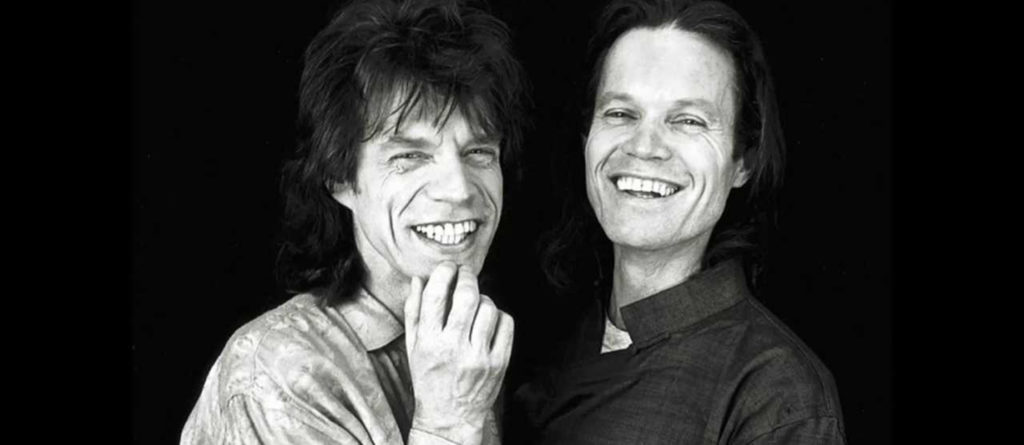
Following Chris’ latest sell-out performance at the Crooked Billet, he agreed to be interviewed for Maverick Chris Jagger, younger brother of Rolling Stones’ frontman Sir Mick, has pursued his own musical career for many years. His strong performances of original American country-influenced, Cajun and blues-tinged material have earned accolades from professional critics, fellow musicians, discerning fans and music business cognoscenti. But Chris lives a relatively quiet and conventional country life at his Somerset farmhouse home. Now 65, Chris has trained as an actor, been involved in stage management, fashion design, journalism, radio and film, as well as also having driven taxis, though it is music that has been a constant theme throughout his life. Chris has recorded a series of albums featuring his own songs and has toured extensively in the UK, Europe, Australia, Canada and the USA. His favourite venue is Oxfordshire’s celebrated Crooked Billet pub in the village of Stoke Row where he appears regularly with an acoustic trio. Chris is one of the most popular acts to perform there, which is quite an achievement given the famous names the Crooked Billet attracts. George Harrison, Joe Brown, Chas Hodges, Jon Lord, Hazel O’Connor, Gary Booker, Sam Brown and many internationally famous names from jazz, folk, country and rock, as well as from film, theatre and TV, have been regulars in this tiny gem of a venue, run by master-chef and former rock musician, Paul Clerehugh. Following Chris’ latest sell-out performance at the Crooked Billet, he agreed to be interviewed for Maverick. Not long after the Rolling Stones’ triumphant 50th anniversary concert at London’s O2 Arena, I travelled into deepest rural Somerset to meet Chris who had been tending the small flock of sheep he and his wife Kari-Ann own. “We really relish our lifestyle down here,” Chris tells me. “We have been in Somerset for more than a decade now-we lived in Glastonbury before and it is just so much better than living in Muswell Hill, North London as we used to. There is a real sense of involvement with the local farming community here. In remote rural areas like this there is a mutual dependency as well as an acceptance of everyone, regardless of who they are. And a lot of bartering goes on which I enjoy; exchanging a few dozen eggs for some locally made cider, borrowing a cockerel or a ram. It is still a traditional way of life which I’ve come to truly appreciate. Some of the highlights of the last few years have been performing at annual gigs for local people in the cider barn just yards from here. A few of my recent songs reflect my Somerset life-a track on my THE RIDGE album is called The Farmer.” This bucolic existence is a contrast from Chris’ late teenage years at the heart of “swinging’ London in the sixties. After a childhood in Dartford, Kent where he enjoyed singing in the junior school choir, Chris attended Eltham College in South East London. His father, a former history and PE teacher who worked for the Central Council for Physical Recreation and wrote books on sport, was not wealthy. So sending Chris to this prestigious private school meant a considerable financial sacrifice. Chris then won a place to study drama at Manchester University, but he opted not to go, preferring instead to spend time in London where elder brother Mick was enjoying his first years of fame as a Rolling Stone. “Our parents had always tried their best for us and I am sure they were disappointed I didn’t go off to university,” Chris reflects. “There had been very little music or acting at Eltham College. Despite that, I had thought I would like to do drama. But when I went to Manchester for the interview it just seemed so drab and stuck in the past. London was such a happening place. The thought of leaving all that action to go back to college to read Shakespeare up in Manchester was very unappealing. So I didn’t do it. There are times I’ve wondered what I missed but on balance, I’ve few regrets.” “Instead I took a year off and hung out in London with some of the people Mick knew. I was mixing with them all-the Beatles, Jimi Hendrix, all kinds of people. It was very exciting! I was involved with fashion design-our jackets were worn by Mick and by Keith Richards. Jimi Hendrix wears one on the cover of his ELECTRIC LADYLAND album! That jacket is now on show at the Hard Rock Cafe in New York-a piece of sixties psychedelic fashion. It was designed for us by Julia, an Irish girl we met who used to paint ties in Indian ink. We asked her to use the same technique on a jacket. Jimi wore a lot of our stuff and we became good friends. I even went out and toured in Sweden with him. I saw him play three gigs in one day there-only Jimi could have the stamina to do that!” “I also worked at Hampstead Theatre as an assistant stage manager which I enjoyed. Though it was a little disillusioning,” Chris recalls. “Meeting older actors who were broken down characters with alcohol problems and earning a pittance despite having real ability-I started to wonder whether I could hack that as a career, longer-term. But I enjoyed some of the new, more avant-garde plays. Many years later I was in repertory at the Citizens Theatre in Glasgow. I was in one play with Pierce Brosnan and also worked with Ciaran Hinds. I did The Threepenny Opera and had to sing some Brecht songs, which I loved. There was no amplification and a full house in a big Victorian theatre, so it was challenging and I learned so much from it. I also trained in Los Angeles with Stella Adler, a very famous coach. And I was cast in the Kenneth Anger film Lucifer Rising but I was fired when I queried

Maverick interviews Chris Jagger Read More »

Line-up announced for 2016 CMA Songwriters series at London

The CMA Songwriters Series will return to the UK for its 10th European show on Thursday, March 10, 2016 at indigo at The O2 in London. Celebrating the craft of storytelling through song and the stories behind Country Music’s greatest hits, this CMA Songwriters Series will feature Charles Esten, Shane McAnally, Lori McKenna, Ashley Monroe, and Charlie Worsham. Launched in 2005, the CMA Songwriters Series will enter its 12th year in 2016. In 2012, the Series made its European debut with shows in London, Dublin, and Belfast. The Series returned the following year with shows taking place in Ireland, London, and Paris. Since 2014, the CMA Songwriters Series has returned annually to London as part of County to Country, the three day Country Music festival at The O2 in London featuring an outstanding line-up of Country Music’s biggest stars. Performing this year are Esten, one of the stars of the popular ABC Television Network series Nashville playing the role of Deacon Claybourne; McAnally and McKenna, two of Country Music’s hottest songwriters” with McAnnally co-writing most of Kacey Musgraves songs and McKenna currently best known for co-writing the CMA Award-winning Girl Crush for Little Big Town; Monroe, who is a critically-acclaimed singer/songwriter and one third of the Pistol Annies with Miranda Lambert and Angaleena Presley; and Worsham, who paid his dues as a session musician and singing on demos, but is now a rapidly rising star who’s been touring with Lambert and Taylor Swift. Tickets for the CMA Songwriters Series at indigo at The O2 are on sale now from www.axs.com/c2c and www.gigsandtours.com. indigo at The O2 is a 14+ venue. For more information on the CMA Songwriters Series, visit CMAsongwritersseries.com.

Line-up announced for 2016 CMA Songwriters series at London Read More »

Kristy Gallacher – SPINNING PLATES

Singer-songwriter Kristy Gallacher’s second album falls very much into the burgeoning new folk style with mainly acoustic accompaniment utilised to enhance her well-crafted bittersweet songs of relationship issues. Though still in her early 20s, Kristy has been controlling her own music career for several years by running her own record label and self-producing and releasing her recordings. Too many female singer-songwriters sit there strumming a guitar and baring their soul with vacuous lyrics. Not this young lady! She’s a skilled guitarist and her lyrics are well-thought out, cleverly constructed, sometimes with a tinge of humour, other times with a touch of pathos and even heartbreaking fragility. She clothes them in memorable melodies and then brings together a bunch of great musicians to create inventive musical arrangements. I particularly like the use of Lisa Nowak’s fiddle to highlight the sad, story of “Beautiful Bouquet.” The title song has an insistent funky arrangement bubbling away beneath Kristy’s clearly-defined vocals. Though there’s a feel of hopelessness to “Bad Luck,” it’s tempered a little by an optimistic air. These are songs of maturity and intelligence from a young lady with much older shoulders to handle everything that life has to throw at her.

Kristy Gallacher – SPINNING PLATES Read More »

THE LANTERN HAS FALLEN

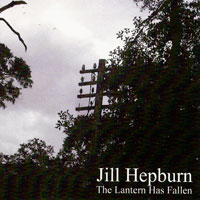
THE LANTERN HAS FALLEN is the inspiring 8-track follow-up release from Falkirk (Scotland) born singer-songwriter, banjoist and guitarist, Jill Hepburn. Being the youngest of five children and growing up in a household filled with music from both ends of the spectrum, including pop, punk, 1960s folk and traditional tunes, her latest collection of songs does more than just hint at this musically diverse upbringing, but rather seemingly pays homage to it. Like her first two recordings-GROOVY ENOUGH FOR TWO (EP: 2005) and SNOWFLAKE (2010) have both received respectable acclaim-this organic, old-timey and effective third effort promises to follow in the same folky, appreciative footsteps as its impressionable formers. The album has a deep and personal edge-something which Jill’s music is fast becoming known for-and it’s easy to see where her self-admittance of a slightly darker tone on this release came from, with menacing numbers such as the banjo carried “Footsteps”-which opens the album beautifully-and the folk-entwined “Farewell My Friend” both sounding as though they tell very moody tales. Make no mistake however; there are one or two infectious toe-tappers on this new release also to lift one’s spirits, such as the instrumentally-composed “The Ragged Garland”-which seems to have a raw Sarah Jarosz feel about it-and the upbeat “I’m Going Away For A While”-both not only adding a diverse dimension to the album, but also demonstrating to her listeners just what a talented musician she is. Vocally, Jill seems stronger than ever; the storytelling edge and the ability to pull readers into her folktale-ish world epitomises her voice, particularly on songs such as “Fire And Flame” and “Listen To The Air,” which does so much to breathe life into the album, music and intimate stories told. Recorded in Tolbooth, Stirling, with the likes of Kenny Brady on fiddle, mandolin and harmonies and Martin Stephenson on guitar, this remarkable little album cries out for mass listenership, and certainly for those who have the ear for sensitive folk, then this one comes with a high recommendation from me; my only disappointment being the want of more tracks on the album and perhaps a duet or two thrown in the mix.

THE LANTERN HAS FALLEN Read More »

Scroll to Top

 (keeps playing while you browse)