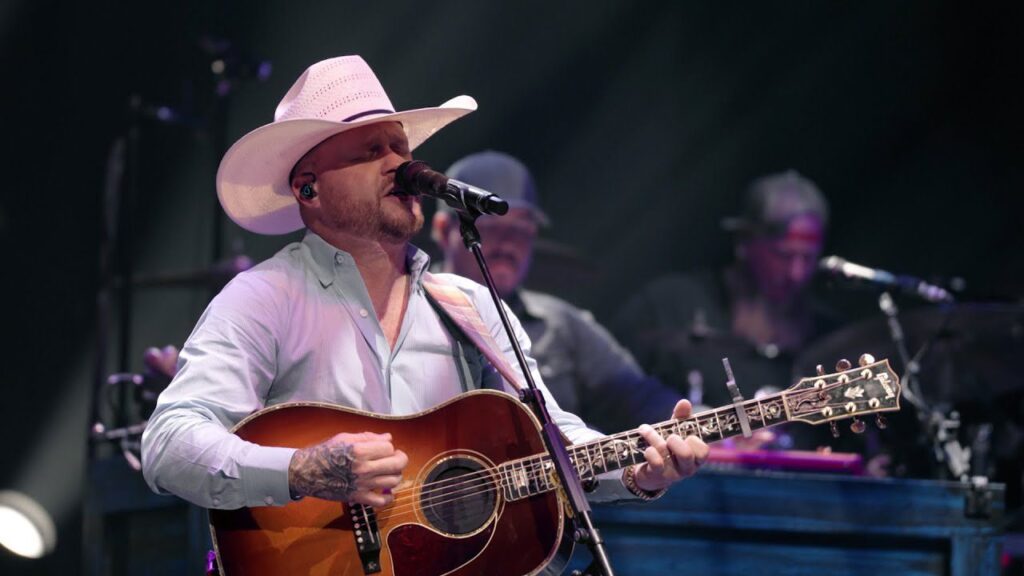
Chris Stapleton’s 2023 album Higher finds the Kentucky songwriter refining rather than reinventing his sound.
Known for his gravel-lined vocals and fusion of country, blues, and Southern rock, Chris Stapleton uses Higher to explore endurance, devotion, regret, and transcendence. The record is less about dramatic shifts and more about emotional precision. It feels lived-in, reflective, and spiritually grounded.
From stripped-back confessionals to expansive, slow-burning ballads, Higher reinforces Stapleton’s status as one of modern country’s most emotionally resonant voices.
The title track “Higher”: love as Salvation
The album opens with its title track, “Higher,” a song that immediately establishes one of the record’s central themes: redemption through love. Stapleton sings of being lifted beyond his own failings, portraying love not as infatuation but as rescue.
The imagery is vertical and spiritual. He describes rising above darkness and doubt, suggesting that love is not just emotional but transformative. The song’s restrained production allows his voice to carry the weight of the message. Rather than overpowering the listener, it pulls them upward slowly, mirroring the lyrical ascent.
“Higher” sets the tone for an album preoccupied with grace and growth.
“White Horse”: Western imagery and emotional reckoning
One of the album’s most striking tracks, “White Horse,” leans into Western symbolism while subverting romantic expectations. The white horse traditionally suggests heroic rescue, but Stapleton complicates the image. He questions whether he can truly save someone, admitting imperfection instead of promising fantasy.
The song blends cinematic guitar lines with lyrics that feel both intimate and expansive. There is dust, distance, and emotional terrain in the writing. Rather than positioning himself as a flawless cowboy figure, Stapleton offers vulnerability. He acknowledges that love is not about galloping in at the right moment but staying through difficulty.
This tension between myth and reality becomes a recurring thread throughout the album.
“Think I’m in Love With You”: Groove, desire, and restraint
“Think I’m in Love With You” introduces a warmer, groove-driven energy. Built on a subtle, almost retro rhythm, the track captures the tentative excitement of falling in love. The phrasing is understated, almost conversational, which enhances its sincerity.
Instead of dramatic declarations, Stapleton uses modest language. The hesitation in the title itself reflects emotional caution. He is not proclaiming certainty, only possibility. That restraint gives the song authenticity.
Musically, the blend of soul and country instrumentation reinforces the album’s genre fluidity. Stapleton remains rooted in country storytelling while allowing R and B textures to shape the atmosphere.
Themes of endurance and devotion
Across Higher, Stapleton returns repeatedly to the idea that love is sustained effort. Many tracks focus less on passion and more on persistence. There is an understanding that relationships endure hardship, doubt, and time.
Imagery of distance, roads, weather, and elevation runs through the album. These natural elements mirror emotional landscapes. Storms represent conflict. High ground represents perspective. Long roads represent commitment. Stapleton’s writing avoids ornate metaphors, instead relying on grounded, tactile images that feel authentic to his Appalachian roots.There is also a subtle spiritual undercurrent. Without becoming overtly religious, several songs imply faith, grace, and moral reckoning. Stapleton’s characters are flawed but striving.
Vocal performance and emotional weight
Perhaps the album’s greatest strength is Stapleton’s voice. His delivery shifts from quiet intimacy to full-throated power without losing control. He knows when to hold back and when to let the grit cut through.
The production remains organic throughout, favouring live instrumentation and minimal studio gloss. This choice enhances the emotional honesty of the record. Nothing feels overproduced. The focus stays on storytelling.
A mature and reflective chapter
Higher does not chase trends. Instead, it solidifies Stapleton’s artistic identity. The album reflects maturity, both lyrically and emotionally. Rather than dramatic heartbreak or rebellious energy, it offers contemplation.
In a genre often dominated by spectacle, Stapleton chooses depth. Higher is about elevation in the truest sense, not flash, but growth. Through grounded imagery, restrained songwriting, and powerful vocals, Chris Stapleton delivers a record that feels timeless rather than momentary.
The result is an album that rises quietly, steadily, and with conviction.